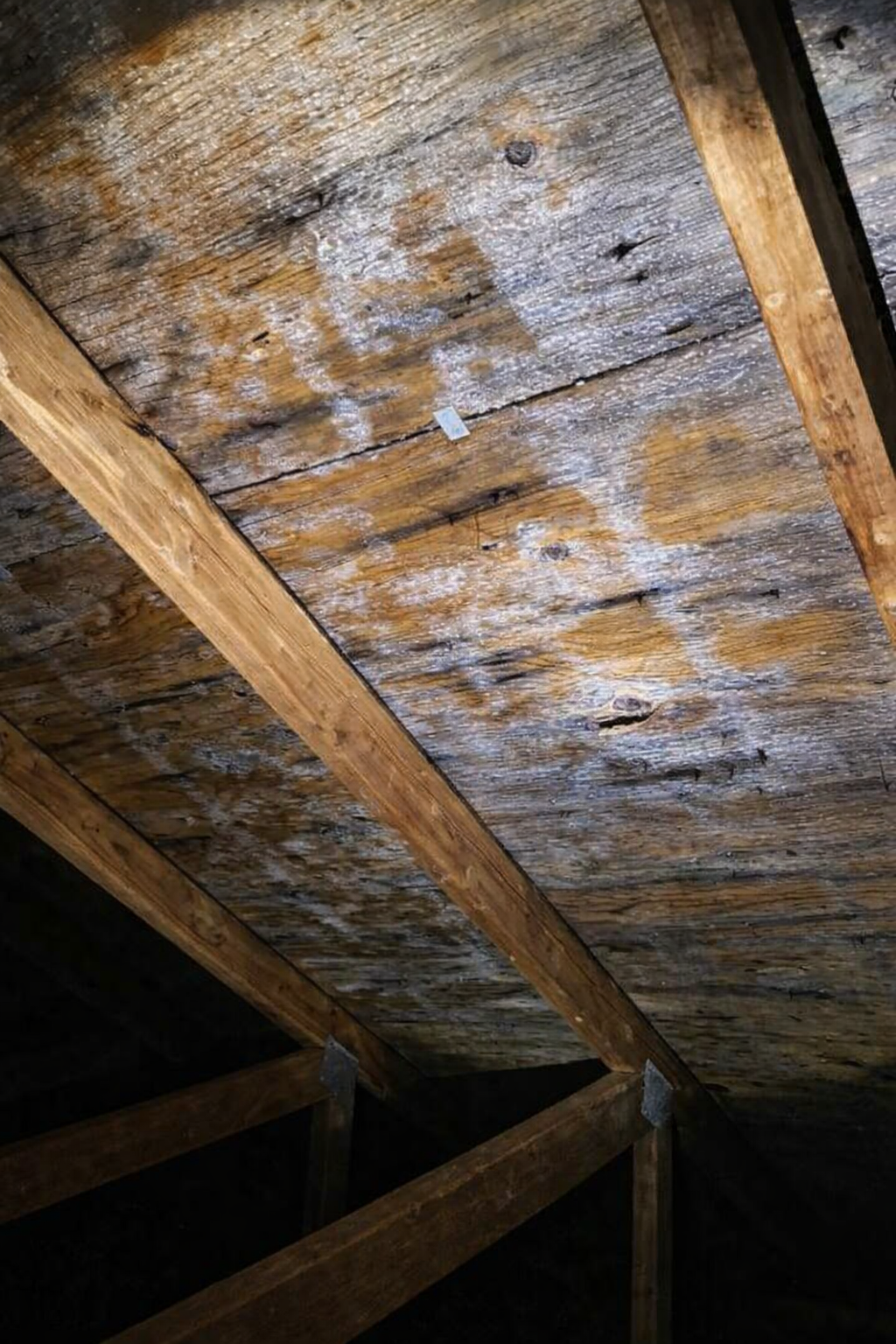
A silent problem affecting thousands of Quebec homes
Attic mold is one of the most common — and underestimated — problems in Quebec homes. Invisible from lived-in rooms, it can grow for months or even years before being detected.
Why mold appears in the attic
Mold needs three elements to grow: moisture, an organic surface (like wood), and a favorable temperature. Your attic often meets all three conditions.
The main cause is condensation. In winter, warm, humid air from your home naturally rises toward the attic. When it comes into contact with the cold surfaces of the sub-roofing, it condenses into water droplets.
Most common sources of moisture
Poorly connected bathroom or dryer vents that blow directly into the attic are among the most frequent causes. Plumbing leaks, water infiltration through the roof, and the lack of a vapor barrier are also common culprits.
Insufficient attic ventilation aggravates the problem. Without adequate air circulation between the soffits and the ridge, moisture stays trapped and accumulates on the wooden frame.
Dangers to your family's health
Attic mold does not stay confined to the attic. Microscopic spores travel through cracks, recessed lighting, access hatches, and ventilation ducts.
Prolonged exposure to mold can cause: allergies, irritation, chronic nasal congestion, persistent cough, asthma attacks, and respiratory infections.
How to detect mold in your attic
Certain signs can alert you without even going into the attic: a persistent musty smell upstairs, damp spots on the ceiling, or peeling paint.
In the attic, look for black, green, or white spots on the sub-roofing plywood and on the rafters. Also check for rusted nails — a classic sign of excessive condensation.
The professional decontamination process
Attic mold decontamination is specialized work that should never be attempted as a "DIY" project. Inadequate cleaning can spread spores throughout the house.
At Solution Isolation, our process includes: area containment, antimicrobial treatment, wood sanding if necessary, and the application of a protective sealant. We then correct the root cause of the problem.
Preventing mold: best practices
Ensure all vents are properly connected to the outside. Verify that your attic has adequate ventilation with clear soffits and a functional ridge vent.
Well-installed insulation with a continuous vapor barrier on the warm side prevents humid air from entering the attic. This is why we always recommend combining decontamination with an insulation upgrade.