DecontaminationOctober 13, 2026
Attic Condensation, the Problem You Don't See Coming
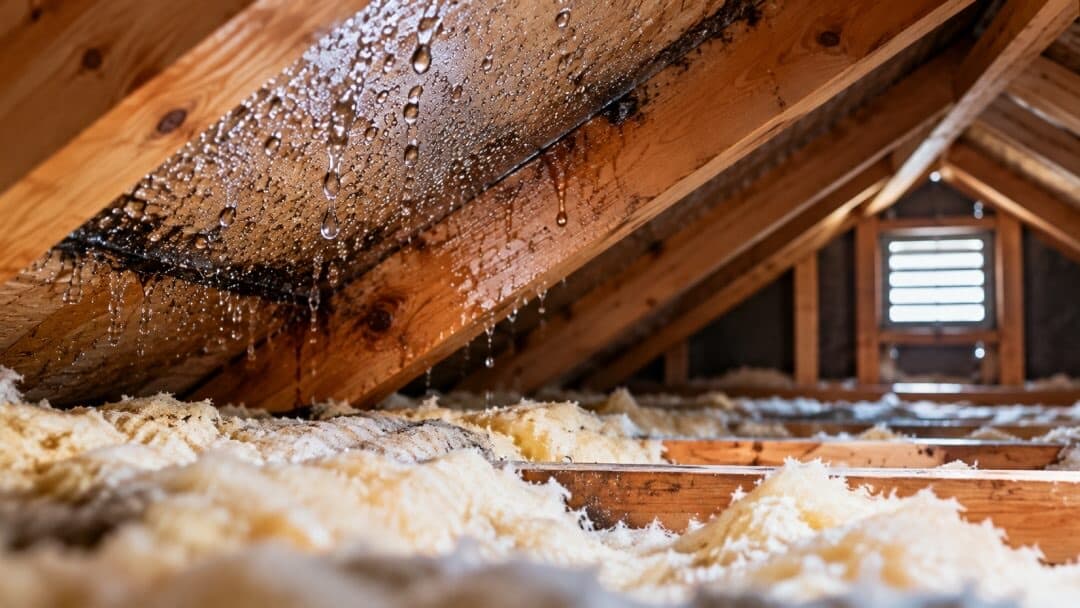
Attic condensation forms when the warm, humid air of the house meets the cold surfaces of the attic space, especially in winter. It's not a harmless problem: this moisture in the attic space can soak the insulation, encourage mold and damage the framing. Fixing it for good comes down to three levers: air sealing, ventilation and insulation.
Since the attic is rarely inspected, the problem is often discovered too late, when the damage is already done. Yet a few signs make it possible to spot it early, and above all to understand why moisture settles in. Here's what's happening over your head, and how to fix it before the bill, or the repairs, start to climb.
What Is Attic Condensation?
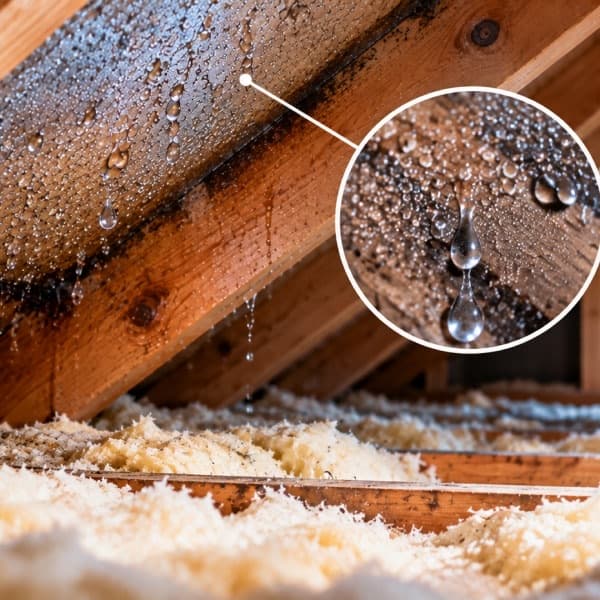
Condensation is simply water vapour turning back into liquid on contact with a cold surface. It's the same phenomenon as the fog on an icy glass in summer. In an attic, that cold surface is the underside of the roof in winter, and the vapour comes from the warm air rising from the house.
When this humid air reaches the attic space and touches the frozen roof decking, the moisture settles there as droplets or, in extreme cold, as frost. As long as the cold lasts, this frost builds up silently. Then, as soon as a milder day arrives, it melts and falls as a fine rain onto the insulation and the framing. That's when attic condensation stops being invisible and becomes a real problem.
Why It Forms Mostly in Winter
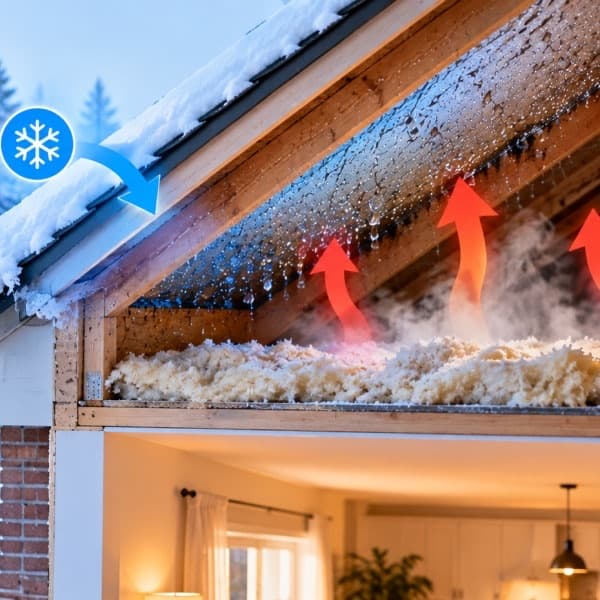
The Quebec winter brings together the perfect conditions for condensation. Inside, the house is warm and its air is loaded with moisture from the kitchen, the showers and the simple presence of the occupants. Above, the attic space is icy. The bigger the temperature difference between the two, the more the vapour tends to condense when it reaches the cold surfaces.
That's why the phenomenon intensifies during cold snaps. An attic space that stayed dry in the fall can be covered in frost by January, simply because the air freezes there faster. This seasonal nature also explains why so many homeowners ignore the problem: it appears and disappears with winter, leaving behind marks that are wrongly blamed on a roof leak.
Where Does Attic Moisture Come From?
To fix condensation, you first have to understand where the water comes from. In the vast majority of cases, the moisture in the attic space doesn't fall from the sky: it rises from the house. The warm, humid air of the living areas naturally tends to rise, and it seeps into the attic through the slightest opening in the ceiling.
These openings are more numerous than you might think: around recessed light fixtures, a poorly sealed access hatch, pipe or electrical wire penetrations, ceiling joints. On top of that comes a common mistake: bathroom or dryer vents that discharge their humid air directly into the attic space instead of exhausting it outside. Finally, insufficient attic ventilation prevents the moisture that is there from escaping. Three sources, then, but one common point: humid air gets in, and it doesn't get out.
Signs of an Attic That's Too Humid
How can you tell if your attic space is suffering from excess moisture? Several clues call for an inspection, especially in winter or just after a thaw:
- Frost or droplets on the underside of the roof in cold weather.
- Insulation that's damp, compacted or stained in places.
- Black traces of mold on the framing lumber.
- A musty smell or a smell of dampness when you open the hatch.
- Roof nails covered in frost, pointing inward.
- Water stains on the ceiling of the rooms below the attic.
A single one of these signs justifies a closer look. Several at once indicate that moisture has well and truly settled in, and that it's best to act before the insulation and the structure suffer.
What Condensation Can Damage
Left unaddressed, condensation attacks the attic on several fronts. The first thing affected is the insulation: when soaked, it loses a good part of its insulating power. As a result, the house gets colder and the heating bill climbs, which, ironically, makes the temperature differences behind the problem even worse.
Next comes mold, which thrives as soon as the wood stays damp, along with the marks and smells that come with it. In the longer term, it's the framing itself that is at stake: wood that is regularly wet eventually rots and loses strength. What starts as a little harmless frost can therefore, season after season, turn into costly repairs. Hence the value of acting early, while the problem is still limited to its cause.
How to Fix the Problem for Good
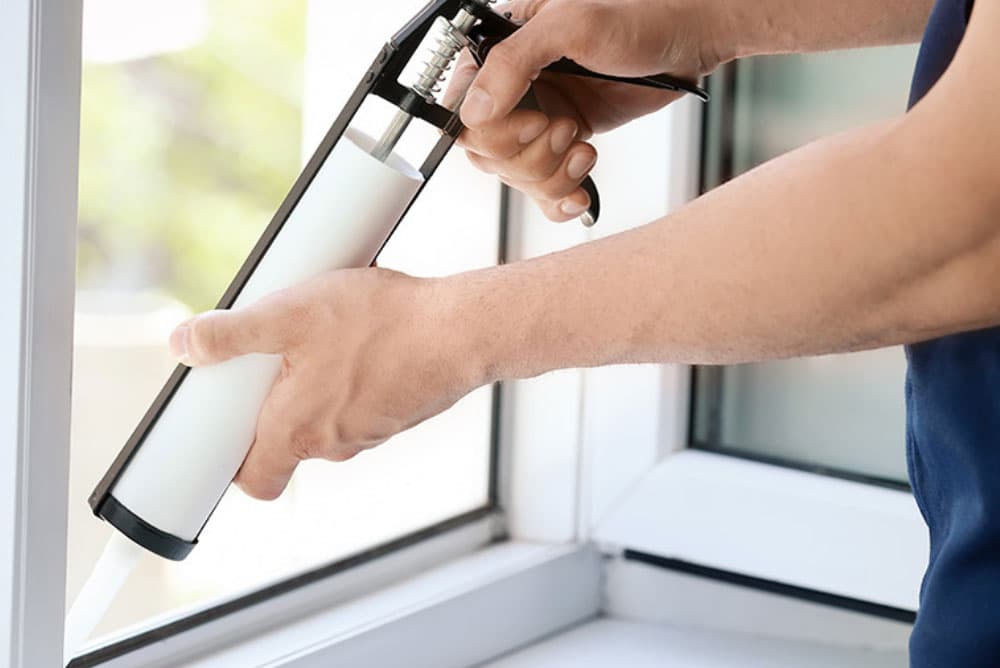
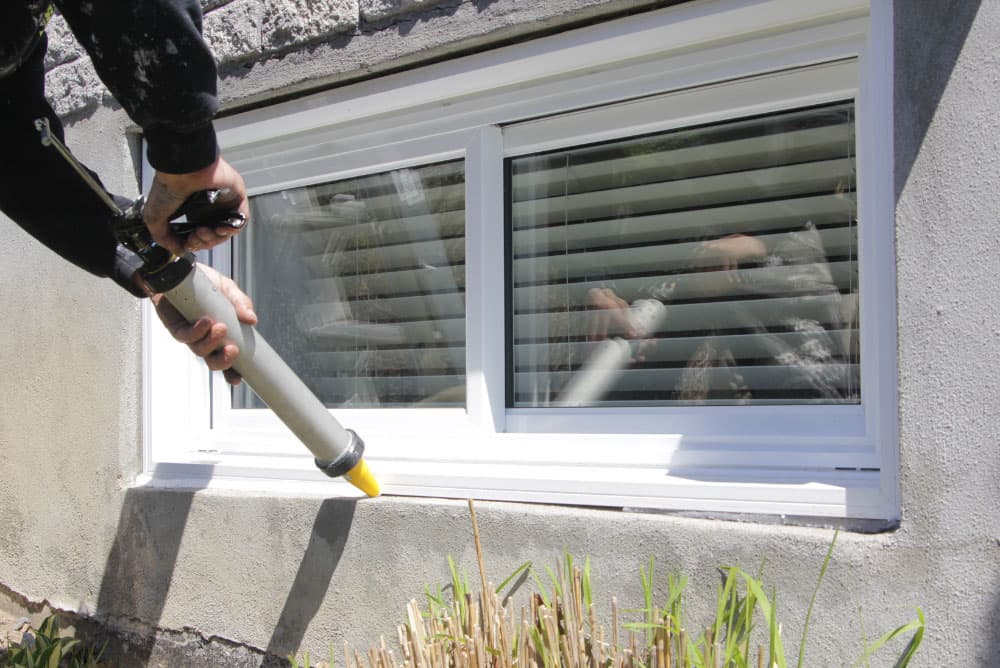
Soaking up the insulation or cleaning a stain fixes nothing if humid air keeps rising. A lasting solution tackles the cause, and it rests on three complementary levers. The first is air sealing: sealing the ceiling openings through which warm air seeps in is the most effective way to dry up the source of the moisture. It's a job of caulking and sealing, meticulous but decisive.
The second lever is attic ventilation. Air intakes at the soffits and exhausts at the roof let the residual moisture escape and keep the attic cold and dry. The third is adequate insulation, which limits heat loss and maintains the thermal balance of the space. Taken together, these three levers form a whole: that's precisely the advantage of entrusting insulation and air sealing to the same team, able to treat the cause rather than a single symptom.
Insulating Without Making Things Worse
A common reflex is to add insulation as soon as you notice a problem in the attic. It's a good idea, but on one condition: not to insulate over an unresolved source of moisture. Adding insulation without correcting the air sealing or the ventilation risks trapping moisture and worsening the condensation rather than fixing it.
Two precautions make all the difference. First, preserve air circulation: baffles are installed to prevent the insulation from blocking the soffit air intakes. Second, seal the ceiling before insulating, to cut off the humid air at the source. It's this overall approach, where insulation, ventilation and air sealing work together, that sets apart an attic that has truly been dried out from a problem that has simply been covered up.
Ready to Dry Out Your Attic Space?
A dry attic is an attic that protects your home instead of weakening it. At Solution Calfeutrage et Isolation, we treat condensation at its source, combining air sealing and insulation to restore a healthy, lasting attic space.
It all starts with a no-obligation assessment to understand where the moisture comes from and target the right intervention. Request your quote today and give your attic, and your whole home, an environment that is finally dry and protected.