DecontaminationOctober 13, 2026
Attic decontamination: giving the home a healthy attic space again
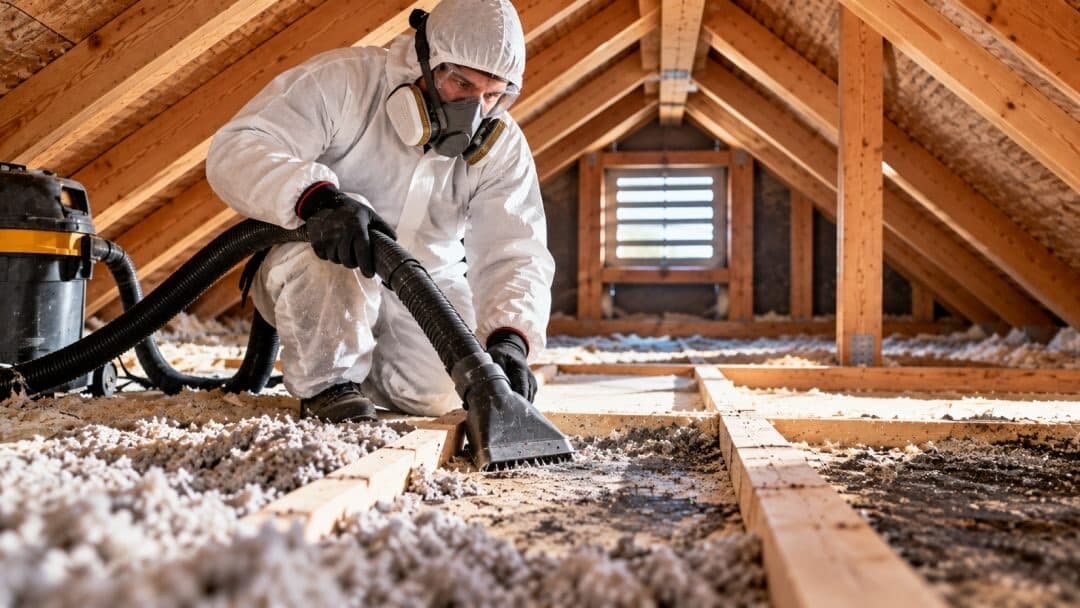
Attic decontamination covers the work aimed at cleaning up an attic space affected by a contaminant: mold, soiled old insulation, vermiculite or animal droppings. The goal is not only to remove what is causing the problem, but to restore a healthy, dry space that is ready to be properly re-insulated.
Since the attic is rarely visited, these problems often develop silently and are discovered during renovations or an inspection. Understanding when decontamination is needed, how it unfolds and why it can't be improvised helps you protect both your home and the health of those who live in it. Here are the essentials, without alarmism and without jargon.
What is attic decontamination?
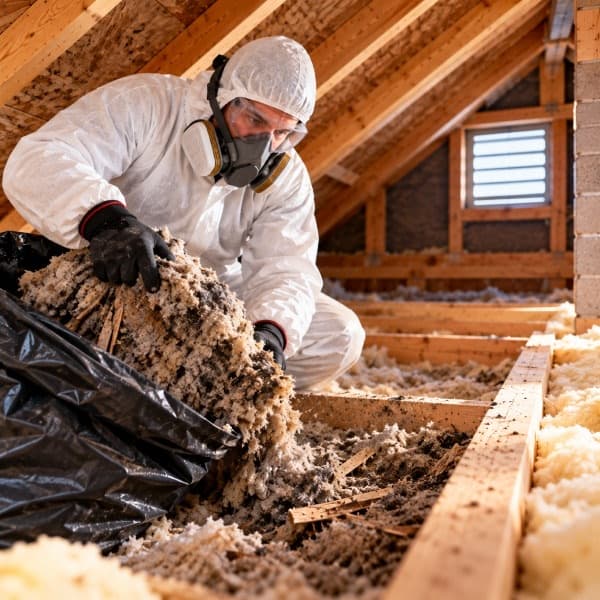
Decontaminating an attic means safely removing everything that compromises the sanitary condition of the attic space, then cleaning up the space so it returns to a healthy state. It goes well beyond simple cleaning: it involves eliminating the source of the problem, treating the affected surfaces and restoring conditions that keep the problem from coming back.
This work concerns the whole attic space, not only the visibly affected area. A contaminant is rarely confined to the spot where you first notice it, and the insulation, being porous, can be affected over a wider area than it seems. That is why attic decontamination always starts with an assessment, before even deciding what to remove and how.
The most common contaminants
An attic can harbour several types of problems, and each requires a specific approach. Here are the situations that most often lead to decontamination:
- Mold, which develops on wood and insulation as soon as moisture sets in.
- Vermiculite, an old insulation that, depending on its origin, may contain asbestos.
- Soiled or soaked insulation, which has lost its effectiveness and retains moisture.
- Bird or rodent droppings, left by animals that nested in the attic space.
- Traces of a past infiltration, with the residues and odours that come with it.
Each of these cases has its own requirements, and some, like vermiculite, call for strict precautions. A single attic can also have several of them at once, which makes the initial assessment all the more important.
Mold in the attic space: the most common case
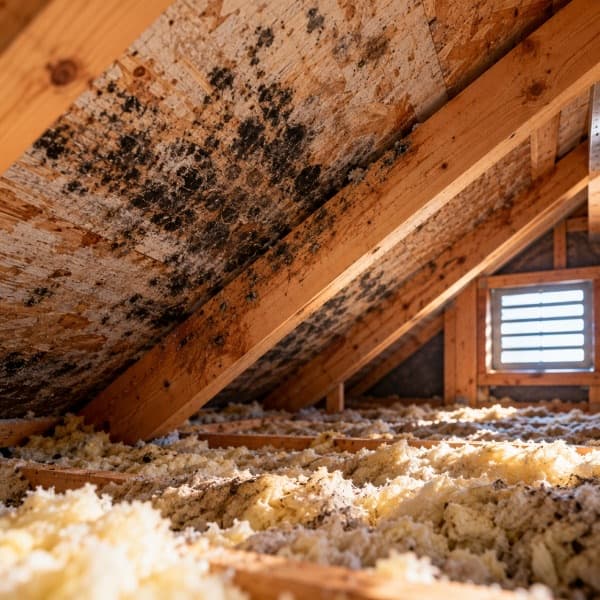
Among all these problems, attic mold is by far the most widespread. It appears wherever moisture meets an organic material such as the wood of the framing, and the attic often combines these conditions: humid air rising from the house, cold surfaces in winter, insufficient ventilation.
What you need to understand is that cleaning off the traces is never enough on its own. As long as the moisture that fed it remains, the mold ends up coming back. A serious decontamination therefore tackles both at once: it cleans up the affected surfaces and seeks to correct the cause, whether that is ventilation to be reviewed or warm-air leaks to be sealed. Treating the consequence without the cause means condemning yourself to start over.
When should you consider decontamination?
Discovering a problem in the attic doesn't mean you should panic, but it does mean you should have the situation assessed. Certain signs justify looking into it without delay: a musty or stale smell when opening the hatch, black stains on the wood, damp or settled insulation, or the discovery of shiny granules suggesting vermiculite.
Other situations naturally lead to action. Water damage, a roof that has leaked, the presence of animals in the attic space or a renovation project affecting the attic are all opportunities to check the state of things. In every case, the right reflex is the same: disturb nothing and entrust the assessment to professionals, rather than trying to determine the nature and extent of the problem yourself.
Why it can't be improvised
Decontaminating an attic is not a weekend project, and for good reasons. Handling a contaminant without the proper method can spread it throughout the house rather than eliminate it. Stirred-up mold releases spores into the air; disturbed vermiculite can release fibres. In both cases, an improvised intervention risks making the situation worse instead of solving it.
A professional decontamination, on the other hand, follows rigorous steps: assessment and, if needed, laboratory analysis; containment of the area to prevent any spread to living spaces; safe removal using suitable equipment; then cleanup and disposal of waste at authorized sites. This framework exists to protect occupants and workers alike, and it makes all the difference between an attic that is truly cleaned up and a problem that has simply been moved.
Decontaminate, then re-insulate: two steps of the same project
Once the attic space is cleaned up, the work isn't quite finished. A decontaminated attic is often left without insulation, or with insulation removed because it was soiled. This is actually the ideal time to start over on healthy foundations and install new, high-performing insulation.
That's where a combined approach makes the most sense. Handling decontamination and insulation in the same project avoids unpleasant surprises and ensures consistency across the whole: we correct the cause, clean up the space, seal the air leaks, then re-insulate properly. Entrusting these steps to the same team, able to manage cleanup as well as insulation and airtightness, lets you solve the problem thoroughly rather than in pieces. The attic then comes out not only healthy, but also more comfortable and more economical.
A healthy attic space protects the whole house
Decontaminating an attic is not only about solving a localized problem under the roof. The attic space is part of the home's envelope, and its condition affects air quality, the durability of the framing and the comfort of everything below it. A healthy attic means a better-protected house overall.
It is also a peace of mind that is priceless. Knowing that the space above your head is clean, dry and safe changes your relationship with your home. Once the attic space is cleaned up and re-insulated, it stops being a source of worry and goes back to being what it should always be: a discreet ally of your comfort and your household's health.
Ready to clean up your attic?
If you suspect a problem in your attic space, the best decision is also the simplest: touch nothing and have the situation assessed. At Solution Calfeutrage et Isolation, we clean up attics affected by mold or other contaminants, before restoring healthy, effective insulation.
It all starts with a no-obligation assessment to understand the nature of the problem and determine the course of action. Request your quote today and give your attic, and your whole home, a healthy, protected environment again.