InsulationOctober 13, 2026
Attic insulation: the right choice for your type of attic
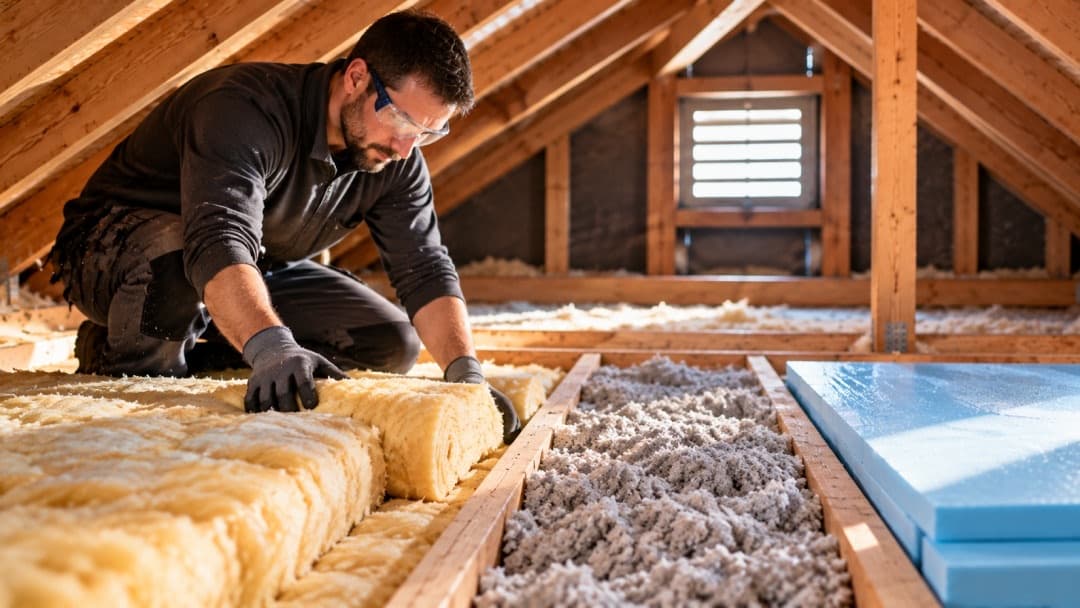
Attic insulation means insulating the space under the roof to keep heat from escaping the house. But it isn't done just one way: it all depends on how you use your attic space. We insulate the floor when the attic is unused, or the roof itself when it is finished. That choice decides your comfort and your savings.
In Quebec, warm air rises, and the top of the house is where the most heat is lost, which makes the attic the priority for good insulation. You still have to insulate in the right place. Here is how to recognize your type of attic space and determine the solution that truly suits you.
Attic insulation: what are we talking about?
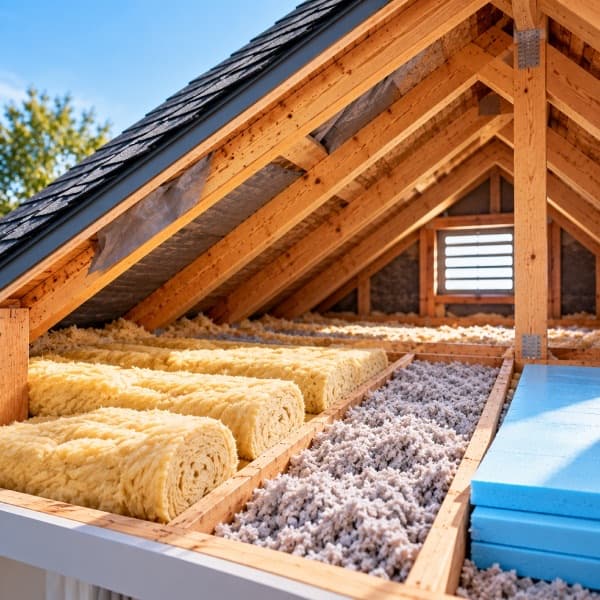
The attic space is the area between the ceiling of the top floor and the roof. In Quebec, people more often say attic or "entretoit", but it is the same zone: the volume at the very top of the house, just under the roof. It is a strategic spot, because it is where heat tries to escape first.
Insulating this space amounts to installing a thermal barrier between your heated rooms and the outdoors. Done well, this barrier holds heat in during winter and keeps the sun's heat out in summer. Poorly placed or incomplete, it lets your heating work for nothing. The real question is therefore not only whether to insulate, but exactly where to put the insulation.
Unused or finished attic space?
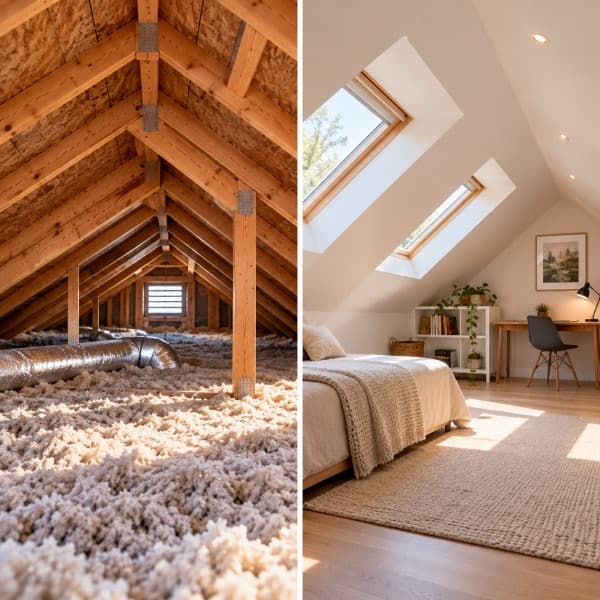
This is the distinction that changes everything, and it depends simply on how you use the space. An unused attic space is an attic nobody lives in: too low, cluttered or simply unused, it is rarely accessed, mostly for storage. A finished attic space, on the other hand, is livable space, turned into a bedroom, an office or a playroom.
This difference directly determines where to install the insulation. In an unused attic space, there is no reason to heat the volume under the roof, so we insulate the floor to keep the heat in the rooms below. In a finished attic space, we can't insulate the floor since you live on top of it: it is the roof itself that has to be insulated. Identifying your situation is the first step of any successful project.
The attic floor: the most common solution
The vast majority of Quebec homes have unused attic spaces, and it is also the simplest case to treat. We insulate the attic floor, that is, the top of the ceiling of the lived-in storey, to create a barrier right above your living spaces.
The most common method is blown-in insulation: loose-fill insulation, cellulose or mineral wool, is blown in, spreading evenly and filling every nook, even around obstacles. It is an effective, fast and generally the most economical solution, because we are insulating a horizontal surface that is easy to access. It is also the most efficient per square foot, since the insulation is concentrated exactly where the heat is trying to escape.
Roof insulation: when the attic is livable
When the attic space is finished, the logic is reversed. Since the space is occupied, the insulation must follow the slope of the roof: this is roof insulation, also called rafter insulation. We then insulate the sloped surfaces under the roof, and often the side knee walls, to completely envelop the lived-in room.
This approach is more technical. A ventilated air gap must be maintained between the insulation and the roof deck, otherwise moisture risks building up and damaging the structure. The choice of material and the thickness available under the rafters also demand more attention. Roof insulation generally costs more than insulating an attic floor, but it is unavoidable as soon as you want to live in the space while keeping it comfortable and healthy.
Insulation, airtightness and ventilation: the winning trio
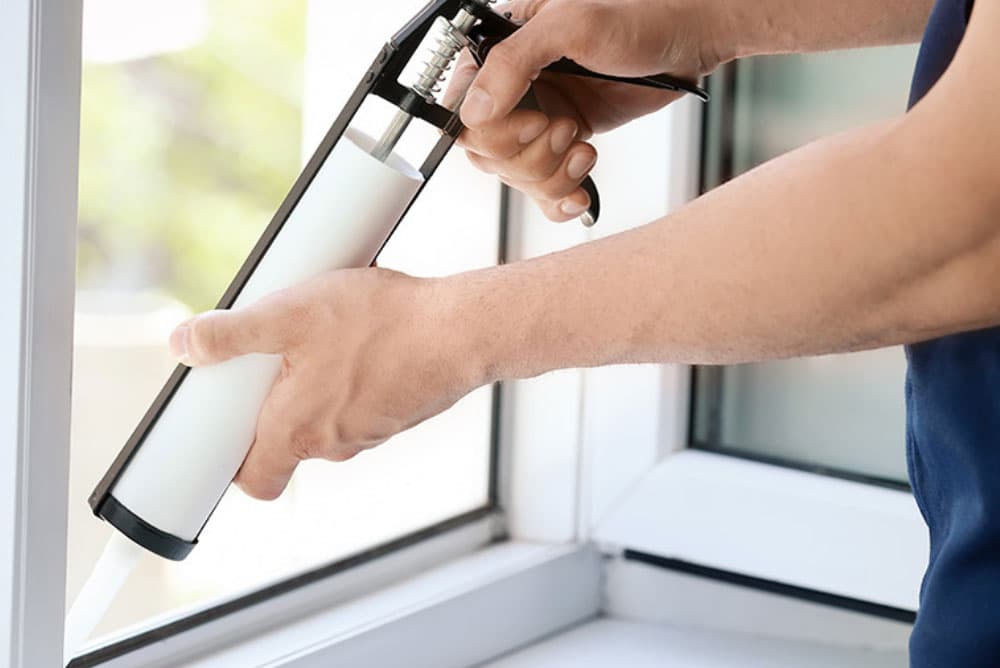
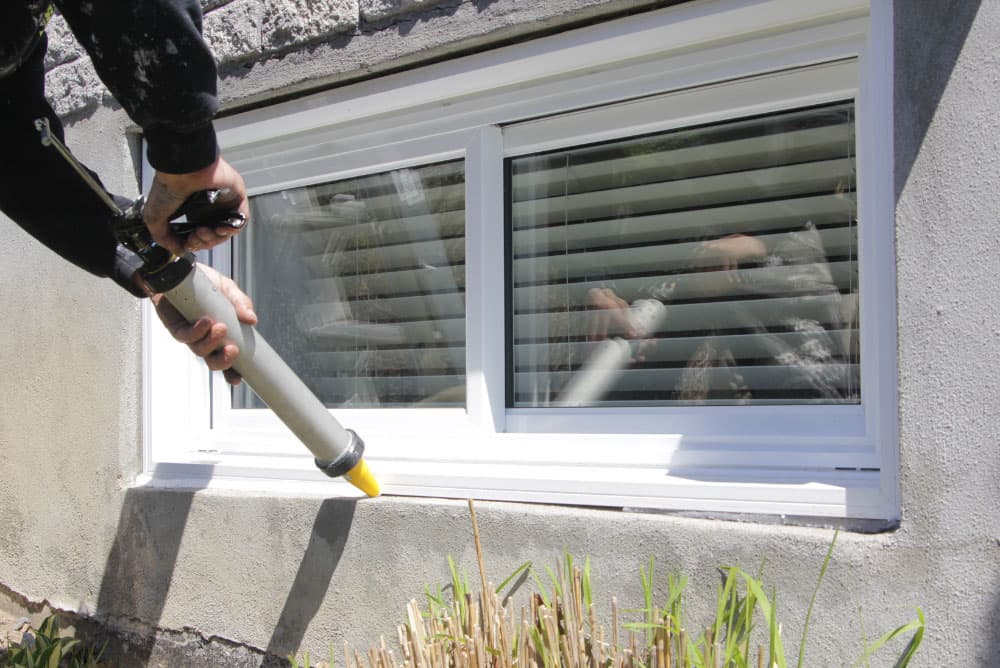
Installing insulation is not enough to guarantee a high-performing attic. Insulation slows losses through surfaces, but warm air keeps leaking through the slightest opening in the ceiling: recessed light fixtures, the access hatch, pipe penetrations. That's where airtightness comes in, which consists of sealing these leaks through caulking and sealing work. Without it, part of your insulation efforts literally goes up in the air.
Ventilation completes this trio. A well-ventilated attic lets residual moisture escape and stays cold and dry, which prevents condensation and mold. Insulation, airtightness and ventilation therefore form an inseparable whole: neglecting one weakens the other two. That is precisely the benefit of entrusting insulation and caulking to the same team, able to treat the house as a whole rather than piece by piece.
What you gain, concretely
Well-planned attic insulation transforms the day-to-day of a home. Here are the most tangible benefits:
- A lighter heating bill, by no longer paying for lost heat.
- Constant comfort, with a more even temperature from room to room.
- A more bearable summer, with less roof heat entering the house.
- Less condensation and mold, thanks to a healthy, ventilated attic.
- Preserved value, an energy-efficient home being more appealing at resale.
These benefits add up year after year. That is what makes attic insulation one of the most profitable investments for a home, in both comfort and savings.
Ready to insulate in the right place?
Properly insulating your attic space starts with a good diagnosis: unused or finished, floor or roof, every house has its answer. At Solution Calfeutrage et Isolation, we assess your attic and determine the right solution, combining insulation and airtightness for a lasting result.
It all starts with a no-obligation assessment to pinpoint where and how to insulate your home. Request your quote today and make your attic a true ally of your comfort, winter and summer.