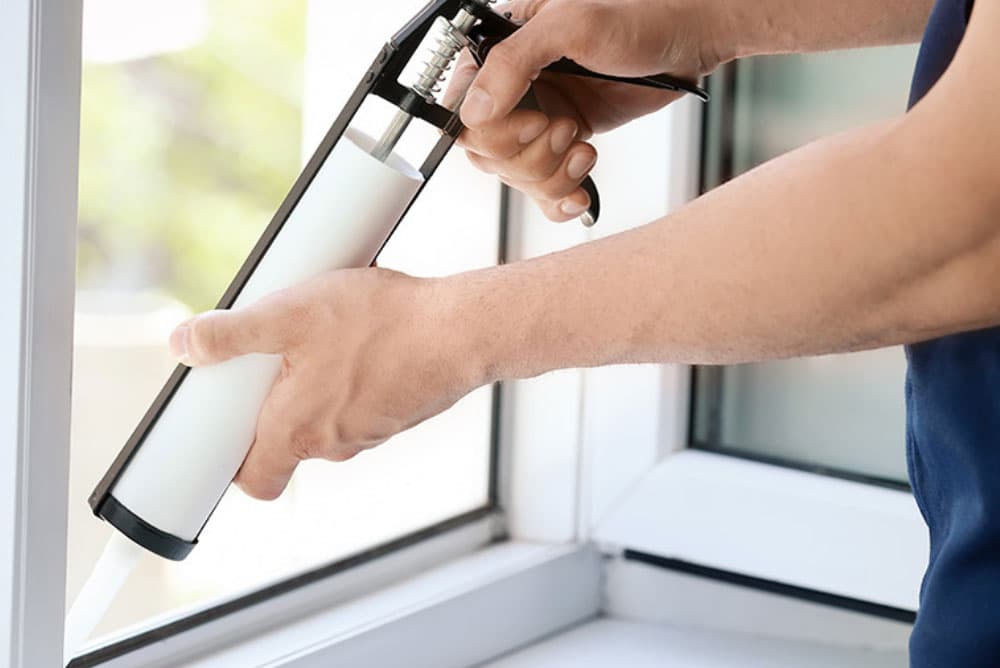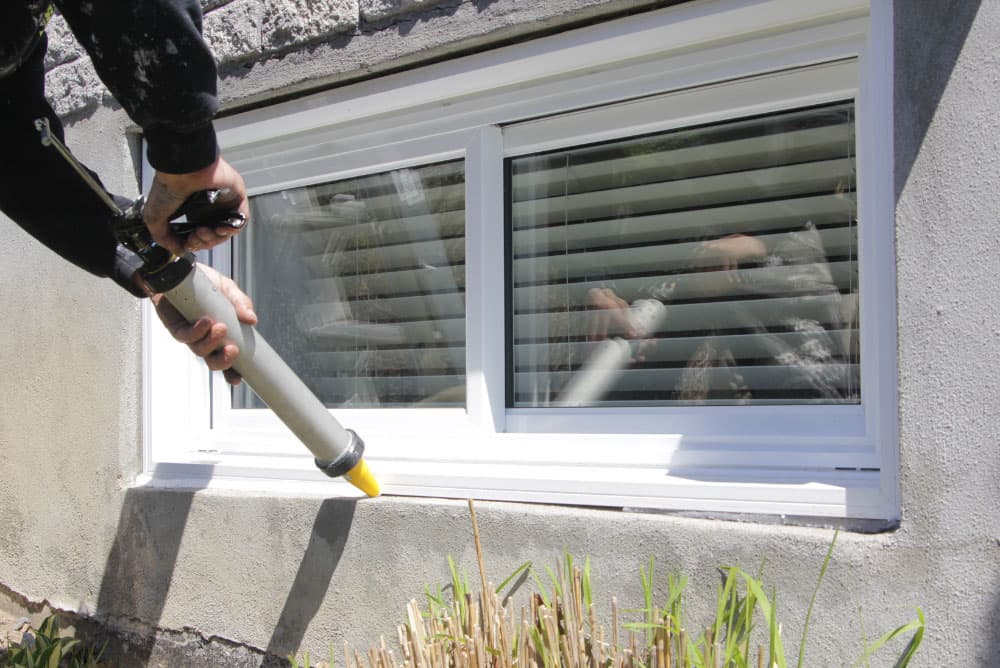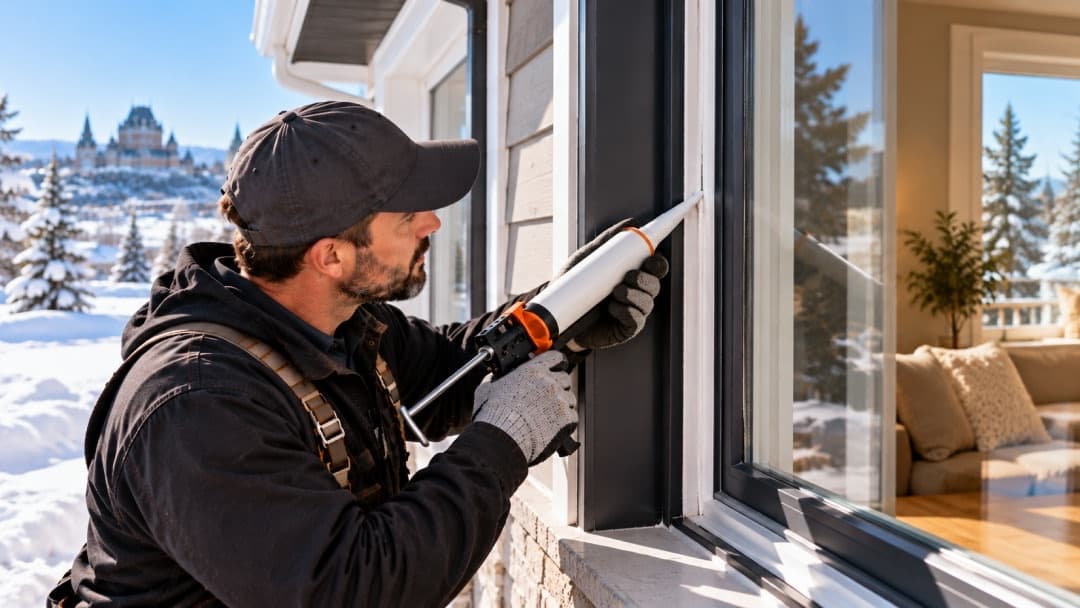
Door and window caulking means sealing the joints around these openings to block air and water infiltration. It's a discreet, almost invisible barrier, but an essential one: done well, it keeps you warm, protects the house from moisture and lightens your heating bill.
We rarely think about it, until the day a cold draft gives away a joint that has failed. Yet in Quebec's climate, caulking is one of the most worthwhile maintenance jobs on a home. Here's why it matters so much, and how to tell when it's time to redo it.
What is door and window caulking?
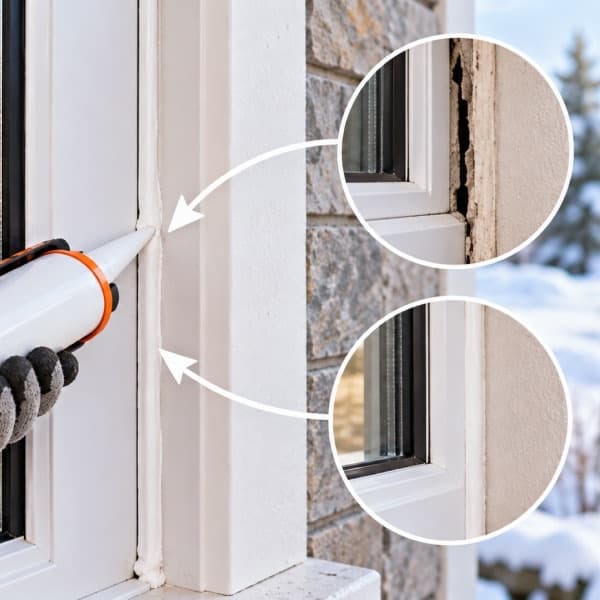
Caulking is the application of a sealing product, the sealant, in the joints around your doors and windows. Its role is simple but crucial: filling the gaps through which air, water and sometimes insects would otherwise get in.
Around a window or a door, there is always a junction between the frame and the wall. Over time, this junction moves, under the effect of temperature changes and building movement. Door and window caulking seals this sensitive area to keep the house's envelope airtight and continuous. It's a link that's small in size, but decisive for the comfort of the whole house.
Why it matters so much in Quebec
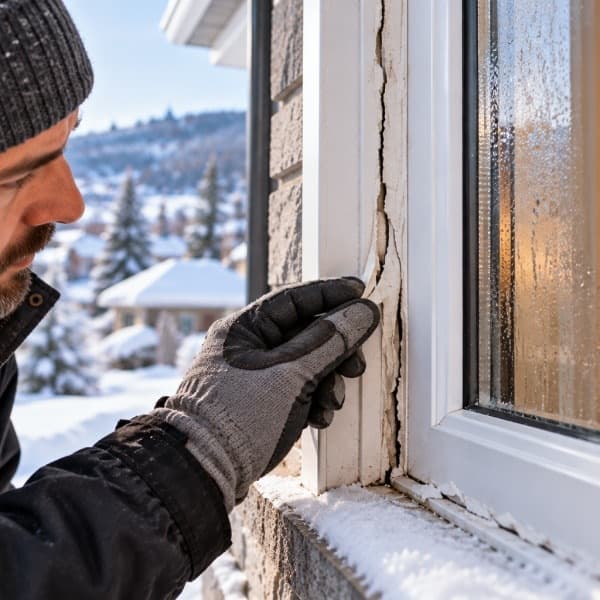
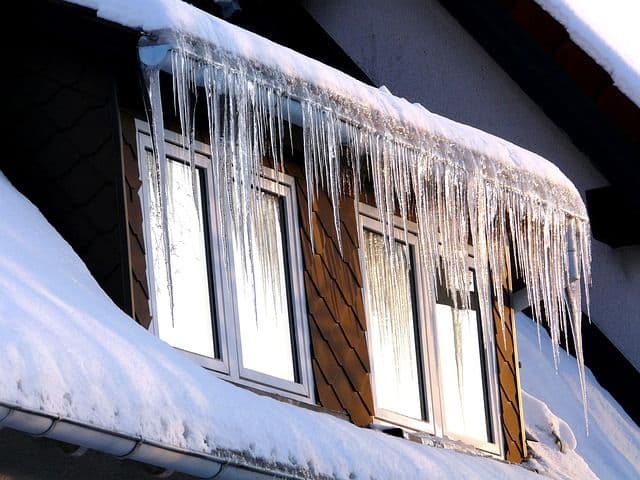
Few places put caulking to as harsh a test as Quebec. Our harsh winters, humid summers and above all our repeated freeze-thaw cycles age sealants faster than elsewhere. A joint that's flexible today can crack, harden or peel away after a few seasons.
And failing caulking has direct consequences. Cold air seeps in and drives up the heating bill. Rain or meltwater can get into the walls and cause costly damage, sometimes mold. In a climate this demanding, home caulking in good condition isn't a cosmetic detail: it's front-line protection that works for you every season.
Signs it's time to redo your caulking
How can you tell if your joints have had their day? Certain signs don't lie and deserve a check, especially as winter approaches:
- Cracked, hardened or crazed sealant around the frames.
- A joint that's peeling away or has visible holes.
- Cold drafts noticeable near windows or doors.
- Condensation or water marks on the interior sills.
- A heating bill that climbs for no obvious reason.
- Insects that seem to be coming in around the edge of an opening.
A single one of these clues is reason enough to take a look. Several at once suggest it's probably time to redo the caulking, before the losses, and the damage, pile up. A very simple test can also help confirm it: on a windy day, run your hand along the frames; a thread of cold air often gives away a joint that needs redoing.
Exterior or interior: two kinds of caulking, two roles
It's often overlooked, but caulking a house is done on two fronts. On the outside, the sealant protects above all against water and the elements: it keeps rain, snow and wind from getting in around the edges of openings. It's the one that takes the brunt of the climate.
On the inside, caulking is aimed mainly at airtightness: it blocks drafts and limits heat loss. The two are complementary, and each needs the right product in the right place. A sealant designed for the exterior doesn't have the same properties as an interior sealant, and it's this match between the product, the substrate and the exposure that determines how durable the work is.
Not all sealants are created equal
Standing in front of a store shelf, all the tubes look alike. In reality, a sealant is chosen according to the location, the material and the exposure. Some are designed to withstand the sun's rays and the temperature swings outdoors; others, for airtightness indoors. A product made for the kitchen or the bathroom has no business around a north-facing window.
Flexibility matters just as much as resistance. A good sealant must stay supple to follow the building's movements without cracking by the first winter. That's where an experienced eye makes the difference: choosing the wrong product, even when applied carefully, often means having to start over much sooner than expected. Good caulking isn't just a question of technique, but of material too.
Do it yourself or hire it out?
Redoing a joint may seem within anyone's reach, and for small touch-ups, it sometimes is. But caulking has its pitfalls: laying a bead over an old joint that's peeling away, forgetting to clean the surface or choosing an unsuitable product gives a result that rarely lasts a season. Not to mention openings that are high up or hard to reach, where safety comes into play.
Hiring professionals means making sure the old sealant is removed, the surface is prepared, the right product is selected and the joint is applied cleanly, for airtightness that lasts. It also means benefiting from an overall view of the home's envelope, able to spot an infiltration or heat loss that a simple bead of sealant wouldn't fix. The difference isn't visible the same day: it's measured over several winters.
Caulking and insulation: the airtightness duo
Caulking reaches its full potential when it comes with good insulation. Both aim for the same goal: keeping the heat in and the cold out. Insulation slows losses through surfaces, such as the attic or the walls; caulking, for its part, seals the joints and openings through which air leaks.
This is what's known as the home's airtightness. Neglecting one weakens the other: a well-insulated but poorly caulked house will keep letting air slip away, and vice versa. Treating both together means tackling both surface losses and air leaks, for a much more noticeable gain in comfort and efficiency. That's precisely the advantage of entrusting insulation and caulking to the same team, able to see the house as a whole.
Well-done caulking changes everything
Good caulking isn't limited to laying down a bead of sealant. It starts with removing the old joint, cleaning and preparing the surface, choosing the right product, then applying it cleanly for a finish that's both airtight and durable. It's this rigour that sets apart a joint that lasts for years from one that peels away by the first winter.
The benefits, for their part, are felt quickly: fewer drafts, a more comfortable house, a lighter heating bill and an envelope better protected against water. Over time, it's also the home's value you're preserving, by avoiding the sneaky damage caused by moisture. Few maintenance jobs offer such a concrete return for such a modest effort.
Ready to protect your home?
Caulking in good condition is one of the simplest and most worthwhile ways to keep your home comfortable and protected. At Solution Calfeutrage et Isolation, we master caulking as much as insulation, to treat your home's airtightness as a whole.
It all starts with a no-obligation assessment, to identify the joints to redo and the losses to correct. Request your quote today and give your home a barrier that keeps it warm, dry and sheltered, season after season.