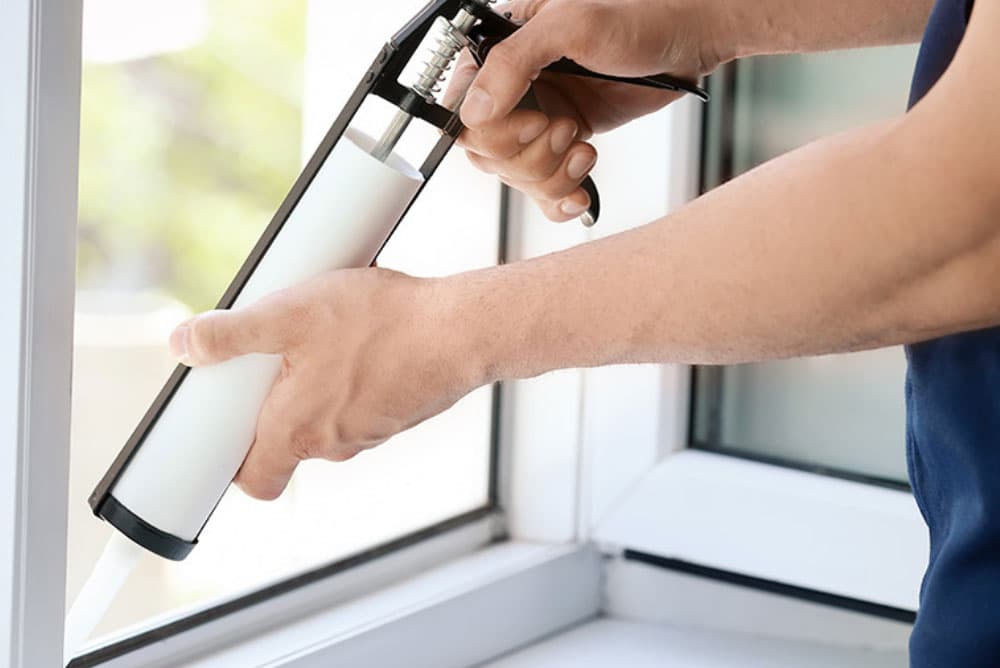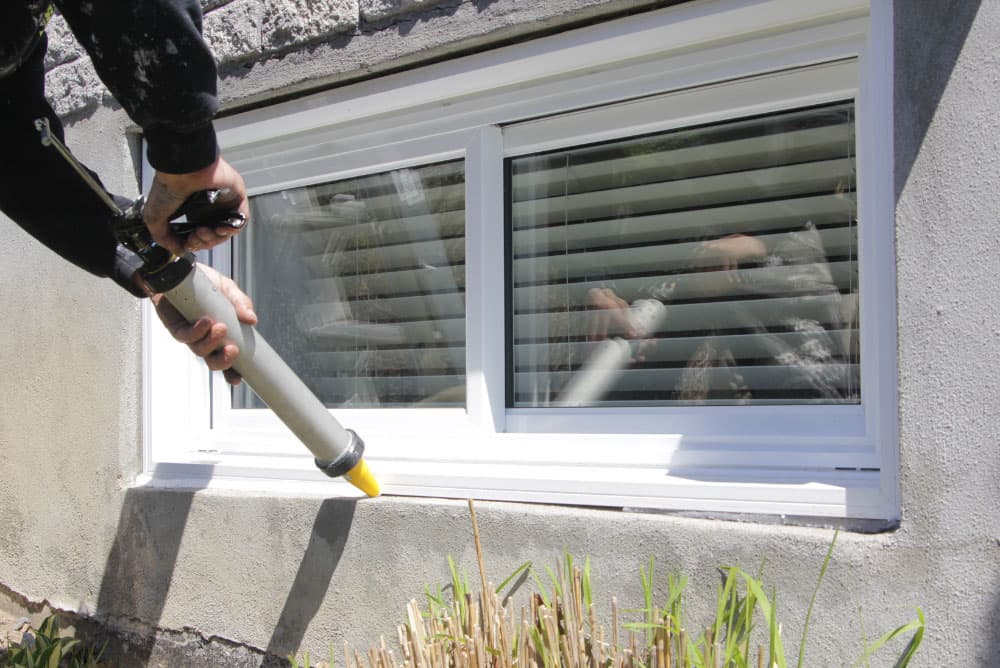
Commercial caulking means sealing the joints of a building's envelope, from the perimeter of the windows to the expansion joints, to block water and air. On a commercial building, a failed joint doesn't cause just a simple draft: it opens the door to water infiltration, structural damage and rising energy bills.
On a building, everything sometimes comes down to a few millimetres of sealant. It's this thin line, invisible from the street, that keeps water and air from getting in where the structure is most vulnerable: at junctions, openings and the meeting points between materials.
Unlike a house, a commercial building exposes hundreds of metres of joints to the weather, often high up and out of sight. A single weak point can be enough to let water seep in for months before anyone notices. Here is why commercial caulking is a matter of building management, not a simple aesthetic detail.
What Is Commercial Caulking?
Commercial caulking means applying a sealing product, the sealant, in the joints that run throughout a building's envelope. Its role is to make that envelope continuous and watertight, by filling every gap through which water and air could get in.
It applies to a wide variety of buildings: office buildings, stores, condominiums, institutional or industrial buildings. What sets them apart from a home is scale and complexity. The surfaces are vast, the joints are numerous, the heights are significant, and the slightest failure can affect several occupants at once. Building caulking is therefore not an enlarged version of residential caulking: it is a job in its own right, one that demands method and expertise.
Enemy Number One: Water
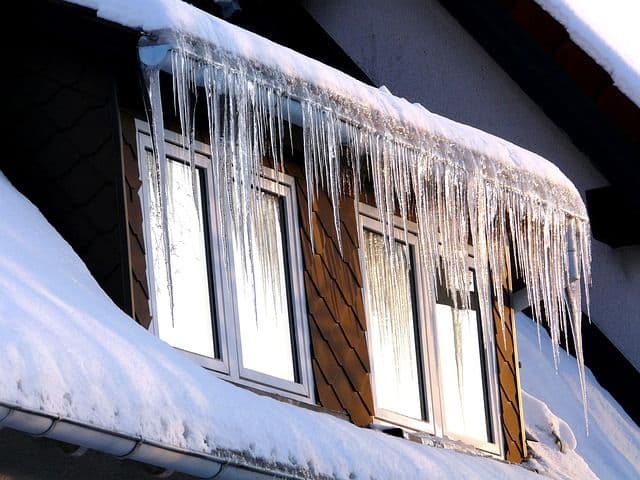
On a commercial building, the first danger isn't the cold, but water. A cracked or peeling joint becomes an entry point for rain and melting snow, which then seep into the walls. And once inside the envelope, water doesn't just pass through: it stagnates, it freezes, it degrades.
The consequences are costly. Deterioration of materials, corrosion, mold, structural damage: what starts as a discreet infiltration can turn into major repairs. The sneakiest part is that this damage often progresses out of sight, inside the walls, until a stain or a smell reveals it. Caulking in good condition is the first barrier that keeps this scenario from starting.
A Building's Joints: More Numerous Than You Think
A building is crisscrossed by far more joints than it seems, and each one has its function. Good building caulking treats them all:
- The perimeter of windows and doors, where the frame meets the wall.
- Expansion joints, which absorb the building's movements.
- Control joints, which manage stresses in the materials.
- Junctions between panels of cladding or façade.
- Masonry joints, between blocks, brick or stone.
- Penetrations, around pipes, ducts and various outlets.
Each of these joints is a potential point of vulnerability. The principle is the same as in residential work, like caulking the windows of a house, but multiplied across an entire building. It's this rigour, joint after joint, that sets a lasting job apart from a cosmetic repair.
Why the Quebec Climate Wears Out Your Joints
Few climates put a building to as harsh a test as Quebec's. Repeated freeze-thaw cycles keep the materials working constantly: they expand, they contract, and the joints that connect them endure this stress year-round. A sealant that has lost its flexibility eventually cracks or peels away.
On top of that come the sun's rays, which degrade exposed products, and the extreme temperature swings between summer and winter. That's why a building's caulking is never permanent: sealants have a lifespan, and a building needs a periodic inspection of its joints. Spotting worn-out caulking before it gives way means keeping water from doing the job for you.
Caulking and Insulation: The Envelope as a Whole
Sealing the joints is only one part of the equation. A truly high-performing envelope combines airtightness and insulation: caulking blocks air and water at the junctions, while insulation slows heat loss through the surfaces. One without the other always leaves a weakness.
On a commercial building, where heating and cooling costs weigh heavily, this overall approach has a direct impact on the energy bill. A tight envelope reduces the load on mechanical systems and stabilizes indoor comfort. That's the whole advantage of entrusting your building's sealing to a team that masters both caulking and insulation, one that can treat the envelope as a coherent whole rather than in little pieces.
A Job That Demands Method and Planning
Caulking a commercial building can't be improvised. The work often takes place at height, which requires suitable equipment and strict safety rules. Each surface also has to be prepared, the old sealant removed, the right product chosen according to the substrate and the exposure, and then applied cleanly for a lasting seal.
On top of that comes a constraint specific to commercial work: the building is generally occupied. Interventions must therefore be planned to limit disruption, while respecting the manager's schedule. This is where an experienced team makes the difference: it knows how to assess the real condition of the joints, target the priorities and organize the work without disturbing activities. Good commercial caulking is as much a matter of planning as of know-how.
Protect Your Building at the Source
On a commercial building, airtightness isn't a luxury: it's what protects your investment from water, cold and time. Joints in good condition prevent costly damage, reduce your energy bills and extend the life of your building. But they have to be maintained before they give way.
At Solution Calfeutrage et Isolation, we assess the condition of your building's joints and treat the sealing of its envelope as a whole, caulking and insulation included. Request a quote today and protect your building at the source, before water finds its way in.