DecontaminationFebruary 10, 2026
Vermiculite and Asbestos: What Every Homeowner Should Know
An invisible danger in thousands of Quebec homes
Hundreds of thousands of homes in Quebec still contain vermiculite in their attics. This once-popular insulation material may be contaminated with asbestos — a recognized carcinogen. Here's everything you need to know to protect your family.
What is vermiculite?
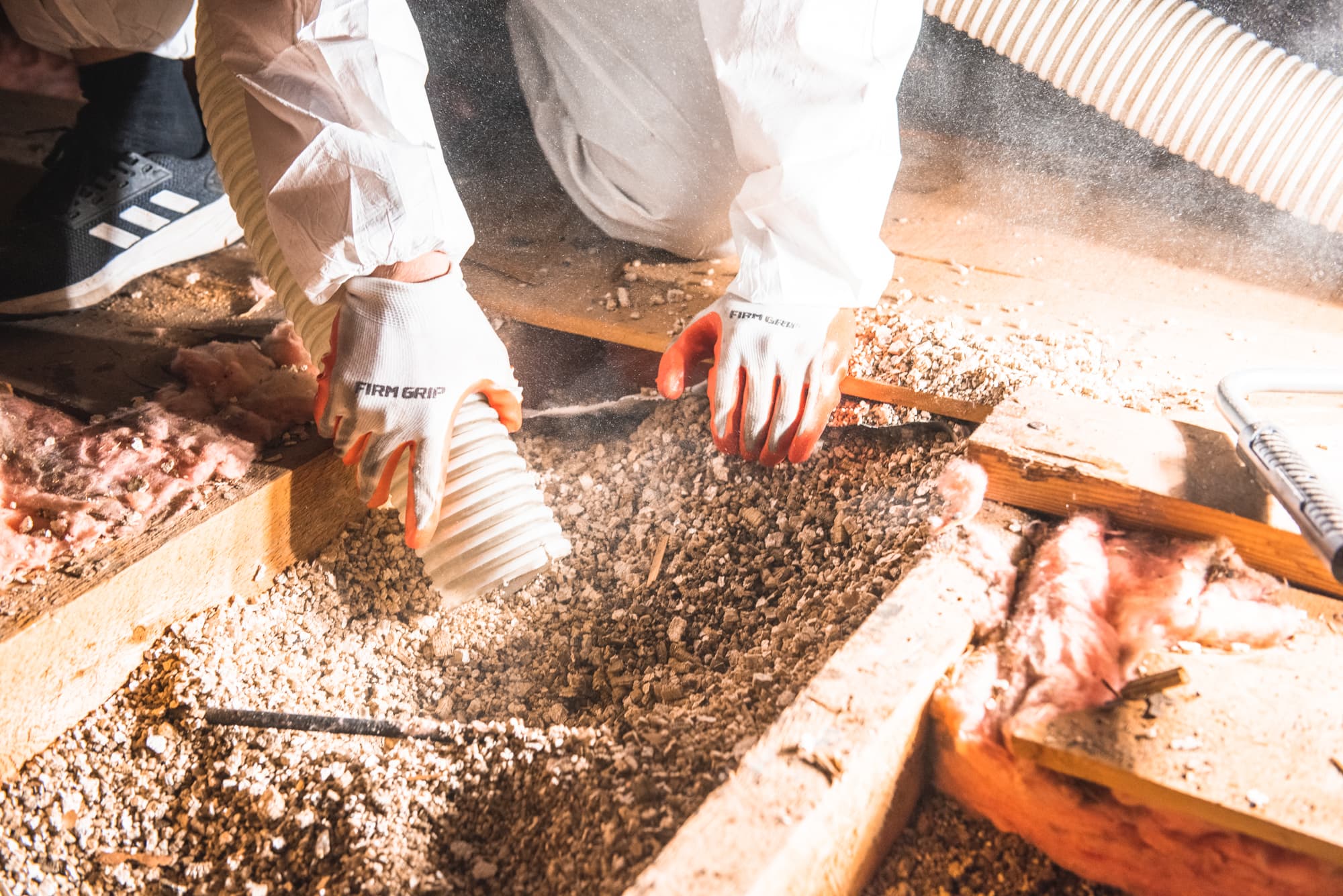
Vermiculite is a natural mineral that, when heated, expands to form small, lightweight, insulating granules. Between the 1920s and 1990s, it was widely used as insulation in Quebec home attics due to its fireproof properties and low cost.
It's easy to recognize: small grey-brown, sometimes golden, accordion-shaped pieces deposited loosely between attic joists.
The link between vermiculite and asbestos
The major problem with vermiculite comes from the Libby mine in Montana, which supplied about 70% of vermiculite sold in North America for decades. This mine was naturally contaminated with an asbestos deposit.
In Canada, contaminated vermiculite was marketed under the brand name 'Zonolite.' Only laboratory analysis can confirm the presence or absence of asbestos fibers.
Health risks
Asbestos is a recognized carcinogen. When asbestos fibers are released into the air and inhaled, they can lodge in the lungs and cause serious diseases: asbestosis, mesothelioma, and lung cancer.
As long as vermiculite remains intact and undisturbed in your attic, the risk is limited. However, any disturbance can release asbestos fibers into the air. That's why you should never handle vermiculite yourself.
How to know if your home is affected?
If your home was built between 1920 and 1990, if you see loose grey-brown granules in your attic, or if you find a bag bearing the 'Zonolite' brand, it's strongly recommended to have a sample analyzed.
At Solution Isolation, we offer free attic inspections. Our certified technicians can identify vermiculite and recommend the appropriate course of action.
The decontamination process
Removing contaminated vermiculite must be done by a specialized company with the required certifications. The process includes: area containment, negative pressure ventilation, mechanical removal, and complete decontamination.
Once the vermiculite is removed, your attic is ready for new, high-performance, safe insulation.
Available financial assistance
Removing contaminated vermiculite and replacing it with new insulation may be eligible for government subsidies, particularly through the Rénoclimat program.
Don't take risks with your family's health. Contact us for a free inspection.