In winter, a row of icicles hanging from the edge of the roof can look almost decorative. Yet behind this familiar sight often lies a warning sign that many homeowners overlook. Those icicles are frequently the visible part of an ice dam, and an ice dam says a lot about what is happening higher up, in the attic.
Understanding what this phenomenon reveals helps you act before it causes damage. Here is how an ice dam forms, the signs to watch for, what it can end up costing, and why the real solution is rarely found on the roof, but in the attic.
Ice Dams at a Glance
An ice dam is a ridge of ice that forms at the edge of the roof and prevents meltwater from draining away. The trapped water eventually seeps under the shingles and can reach the inside of the house. Its cause is almost always the same: heat escaping from the attic melts the snow higher up on the roof, then freezes again at the colder eaves. Treating only the ice fixes nothing: the cause is corrected in the attic, through attic insulation and ventilation. That is precisely what Solution Isolation covers, on the South Shore and across Quebec.
In other words, the ice dam is not the problem, but its most visible symptom.
How an Ice Dam Forms
The mechanism always follows the same logic. First, heat rises from the house and warms the surface of the roof under the snow. That snow melts, then the water runs down toward the edge of the roof, where it is colder because there is no heat underneath. On contact with this freezing zone, the water refreezes and gradually builds up a dam.
As the melt-freeze cycle repeats, day after day, the dam grows and holds back more and more water behind it. That standing water does not simply disappear: it looks for a way through and eventually gets under the shingles, which are not designed to withstand standing water. Everything therefore starts from a single source, heat that should never have reached the roof. This is, in fact, the direct link with heat loss through the attic.
Signs to Watch For
An ice dam leaves several clues, visible from both outside and inside:
- A row of large icicles along the roof overhangs.
- A ridge of ice building up at the edge of the roof.
- Snow melting unevenly on the roof, especially above the attic.
- Stains or water rings on the ceiling or at the top of the walls.
- Moisture or signs of water infiltration near the roof.
Several of these signs together often match those of an attic that lets heat escape, as detailed in the article on the 6 signs of a poorly insulated attic.
What an Ice Dam Can End Up Costing
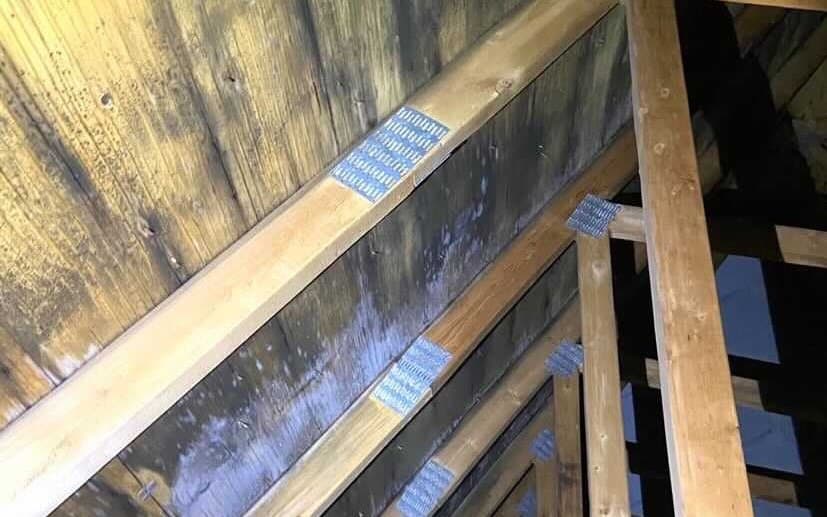
Left on its own, an ice dam does not stay a simple winter nuisance. Water backing up under the shingles can reach the attic, then the ceilings and the top of the walls, leaving stains and damage that can be costly to repair. Repeated over time, this moisture also creates an environment where mould can grow in the attic.
On top of that come less visible consequences. Accumulating ice wears down the eaves and the shingles, while the heat escaping from the house inflates the heating bill. In other words, an ice dam costs you on two fronts: the damage it causes and the energy it wastes. Once moisture sets in, the question quickly turns to attic decontamination.
Why the Problem Starts in the Attic
If heat is warming the roof, it is because it finds a way up and stays in the attic. Three factors usually combine: insufficient insulation, poor ventilation, and air leaks that let heat seep upward.
Good insulation keeps the heat inside the house, while proper ventilation keeps the attic at a temperature close to the outdoor one. When both are missing, the roof is warmed from below and an ice dam becomes almost inevitable, winter after winter. That is why the useful reflex is to look at your home's heat loss rather than at the roof alone.
Act on the Cause, Not Just the Ice
Faced with an ice dam, the temptation is to chip away the ice or install heating cables. These solutions bring relief in the moment, but they do not address the origin of the problem: the following winter, everything starts again in the same spot.
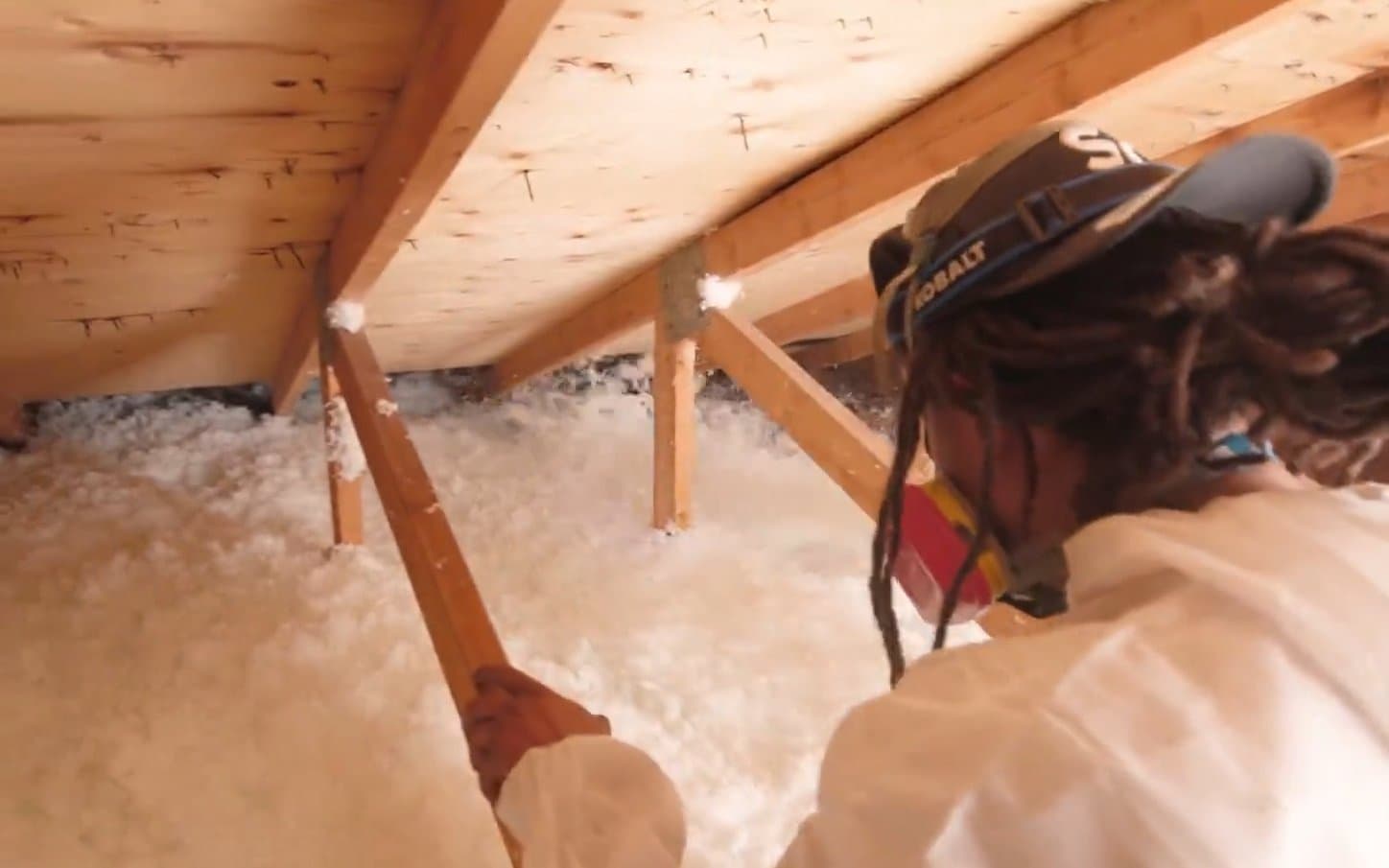
The lasting approach is to correct what is happening in the attic: reinforce the insulation, restore proper ventilation and seal the air leaks. Having the attic assessed makes it possible to pinpoint exactly what is missing, rather than treating the symptoms over and over. The Solution Isolation team handles both insulation and attic ventilation, in order to tackle the source.
Stopgap Measure or Lasting Solution?
To get a clear picture, it helps to compare the two approaches side by side:
| Criteria | Stopgap measure | Lasting solution |
|---|---|---|
| Example | Chipping the ice, heating cables | Attic insulation and ventilation |
| Effect | Relieves the problem in the moment | Corrects the cause of the dam |
| Over time | Has to be redone every winter | A result that lasts |
| In the end | The ice and the leaks come back | Less heat loss and less damage |
Stopgap measures have their uses in an emergency, but they do not replace a fix in the right place. As long as the attic lets heat escape, the dam will come back.
Icicles Coming Back Every Winter? Let Your Attic Do the Talking
An ice dam is not an unavoidable part of Quebec winters: it is a message. It tells you that your attic is letting heat escape, and that is where the real answer lies, not on the roof. Acting on the cause means avoiding both water infiltration and overly high heating bills.
If icicles or signs of water infiltration come back every year, have your attic assessed before the next freeze. Request a free quote from Solution Isolation. With a presence on the South Shore, in Quebec City, in Gatineau and across Quebec, the team targets the source of the problem, from the insulation all the way to the ventilation of your attic.